(originally posted on our Founder Makena's Substack)
At different points in my life, I have been in desperate need of finding “my career people” and at each of these points they have been different types of people:
- 2017: When I was an undergraduate at a school where 75% of my classmates majored in finance, I wondered where my like-minded entrepreneurial and marketing-minded peers were.
- 2023: When I was in the innovation strategy space looking to pivot into media and entertainment, I was desperate to talk to other consultants who had successfully made that lucrative in-industry transition.
- 2025: Now, as both a solopreneur and an entrepreneur, I am looking for independent dramedy screenwriters, pre-seed female tech founders, and career coach solopreneurs. I know these people are out there, but finding them has proven time and time again to be the hard part. (Often more luck than science).
Benefits of a Career Community
For me personally I think the #1 reason for having a career community is because without one, I tend to get stuck in my head really, really quick. It becomes really hard to ‘move’ and enact change. I just feel a ton of self-induced inertia.
Career communities help you:
- Troubleshoot roadblocks when you have them
- Be there to bounce ideas off
- Knowledge share tips, tools, and resources
- Unlock new organic opportunities
- Help you stay motivated
- Exchange memes that only people in your role/industry/career stage would know (No really! How many memes get tossed around on corporate Slacks each day?!)
In short, the value is unmatched. A career community can turbocharge your career and state-of-mind.
We want a career community, but how do we find them?
Finding our respective career communities is something many of us struggle with because the best career communities are usually quite niche but those are also the hardest to find.
Oftentimes it takes serendipitiously stumbling into a What’sApp group or seeing an invite for an event on Luma that seems like it might be a good fit. A lot of us just default to Reddit.
I’ve put together a framework with strategies to help you find and maintain a meaningful, authentic, and helpful career community for you in 2026.
- The WHY: Define and align your intent for joining a community
- The WHERE: Mapping all the different places you can find your community
- The WHAT: Things to look for once you find a potential community
- The HOW: Tips for how to move from one-off, transactional to recurring, reciprocal interactions within your community.
Step 1: The WHY - Define and align your intent for joining a community.
Before you even begin looking for a community, my top tip is to clarify your primary goal in wanting to join one. There are TONS of communities out there!! Different spaces serve different functions.
Identify your goal: Determine what type of support would be most helpful based on the current state of your career and your most pressing need:
- Skill development: Are you looking for people who have mastered a specific tool or craft?
- Job leads: Are you looking for opportunities within a certain industry, organization, or role?
- Peer support: Do you want to crowdsource tips and insights with others navigating similar challenges?
- Mentorship: Are you seeking guidance from someone who is a few steps ahead of where you want to be? (in Star Wars terms a Jedi Knight) Or a few miles ahead? (Jedi Master)
Target your niche: Narrow your search by industry, role, skill set, region, career stage, or demographic (e.g., “Mid-level UX Designers,” “Seattle AI Startups,” or “Female Solopreneurs in Finance”).
- What is your interest area? What industries, and roles/skill sets interest you the most? Are you more of a start up person or a big company person, non-profit or governmental?
- Does region matter? It might if you are looking for in-person connections.
- Do demographics matter? For example, do you specifically want to connect with fellow female founders?
- Does career or project stage matter? I find this to be the most crucial factor. I primarily look for communities where members are at my current stage - novice screenwriter, mid-career strategist, pre-seed founder. This ensures the insights and guidance shared are directly applicable to my situation.
Step 2: The WHERE - Mapping all the places you can find your community.
Communities generally gather across three main environments:
- Online spaces
- The anonymous tools: Platforms like Reddit and Discord can be helpful, although one of my core challenges is that users are unverified. This is a good and bad thing - great in the sense you might be getting candid information from others on say how much is the average amount a pilates instructor should make, but still…are they actually a pilates instructor? Oftentimes too, I find Reddit has the Glassdoor effect where it’s just people bashing and doom-and-glooming.
- The group chats: Slack and WhatsApp groups can be helpful in terms of more meaningful dialogue from verified people but I’ll caveat that they are helpful when you find them. Discovery for me has often relied on more word of mouth than anything. Even once you’re in, searching through message histories can be difficult, and it’s easy to miss hundreds of messages a day which sometimes makes me feel bad.
- Then there is LinkedIn, but the vibe is kind of…awful. It feels like a performative “necessary evil” where it’s everybody’s corporate masked self. There’s A LOT of self inflated ego-boosting and rightfully so: LinkedIn is a powerful marketing tool! I find however that the people doing the coolest jobs are not on LinkedIn, nor are the cool niche organizations. Not to mention the search functionality is abysmal - somehow typing in “NYU and screenwriter” or “tech startups NYC” doesn’t bring me the results I need. Also Premium is wildly EXPENSIVE!!! $39.99 to send a message that it is over 200 characters!? There has got to be a better option!
- Offline / in-person communities
- Local meetups and events: Luma, Partiful, and Eventbrite can be super helpful for discovering local events – at least in NYC (I have yet to try these platforms in LA, but I plan to! Curious how they work in other cities???). I’ve found that in-person panel discussions, workshops, and regional conferences are among the most potent ways to make yourself known and cultivate lasting connections. That said, room-temperature wine and forced small talk can get stale. In NYC, I once found myself crammed into a one-bedroom apartment packed with over 150 women in 85-degree heat! I think I lasted 5 minutes. Not to mention continuing the conversation after an event is also difficult. The magic in the room dissipates once you leave it.
- Co-working Spaces & Innovation Hubs: Local spaces often host free panels, open office hours, and networking breakfasts open to the public.
- Academic and Prior Professional Networks: Reminder to check your existing network and get reconnecting with former classmates, colleagues, teachers, friends, alumni. Tap into professional associations and alumni networks from past schools or employers. I will note that this can be hard to do, getting on a school’s alumni email list can help although I have yet to go to any events. To change a cold lead into a warm lead, try finding those who share your alma mater and are currently working in roles or industries you aspire to join.
My final recommendation for this step is to use a balanced mix of all three: in-person gatherings, digital hubs, and formal networks.
Step 3: WHAT to look for once you find a potential community.
Pointer #1: avoid spreading yourself too thin. I know I’ve had those moments where I am being added to the Slack, What’sApp, with one million events on the calendar and it takes me just a few weeks to completely flame out and want to disconnect from it all for a while.
My advice is to evaluate your options and commit to two or three high-value groups, which you assess by this criteria:
- Signal-to-Noise Ratio: Prioritize spaces where members actively engage in candid knowledge sharing, industry news, skill-building and problem-solving, rather than platforms dominated by self-promotion and spam. While moderated groups are great, heavily structured environments can make 1-on-1 connections harder to form, which is why I personally love peer-run communities. Also, be aware of size. Large group chats with over 200 members are helpful up to a point, but too many voices can become overwhelming. When people ask me what they think the future of ‘communities’ is, I often reply ‘micro’. Sizable enough to be active, yet small enough that you can actually get to know people.
- A Kind, Collaborative Ethos: Look for psychological safety and welcoming environments where people champion and support one another. It’s also vital to find spaces that celebrate wins – not in a braggy way, but in a way that builds momentum because when one person succeeds, the whole community wins. Ask yourself: Can you introduce yourself in a way that allows others to discover your background and goals? Are members competing or are they collaborating? Is someone trying to sell you a $100/month subscription or are they offering genuine advice?
- Mutual Exchange: Choose communities where members actively exchange advice, templates, and portfolio feedback. I find that environments built on reciprocity are the ones that I most come back to. When I was part of the Women in Innovation community in NYC, I loved that they ended events with an “Asks & Gives” callout. Members could offer something (e.g., their company was hiring, or they available for freelance work) and ask for something (e.g., a connection in healthtech or a resume review). It was a wonderful quick but high impact practice. And I was always so pleasantly surprised to see that there were always more “gives” than “asks”!!! It was on paper the most transactional exercise you could do and somehow felt the least. People WANT to give – they just need the right space and opportunity to do it.
I saw this on Pinterest and think it really embodies the essence of a true community:
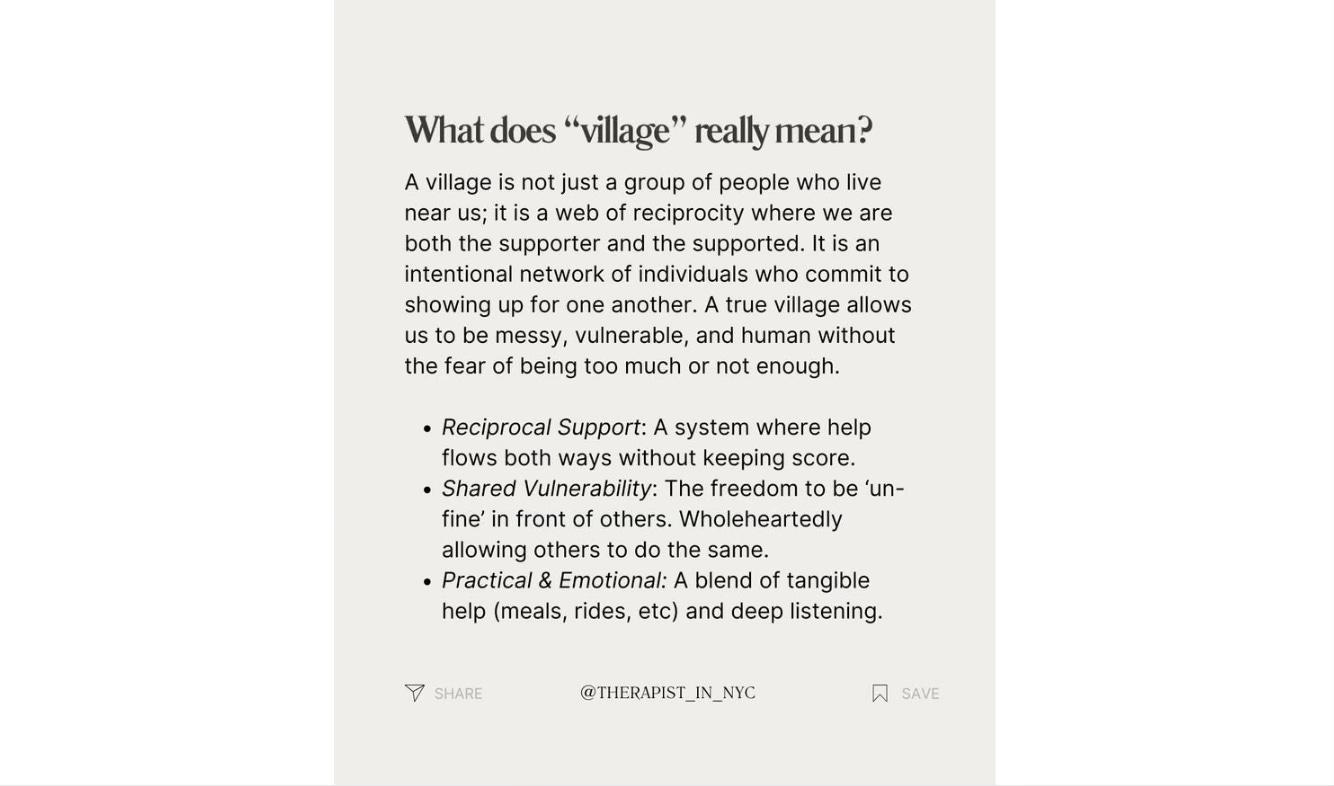
^I LOVE the language ‘web of reciprocity’!
Step 4: Best practices for HOW to carry yourself, and shift from one-off to recurring and high impact interactions within your community.
When you join a community, demonstrate that you are a value-add member by keeping these simple principles in mind. You’ll give more meaning to others and find more meaning for yourself:
- Contribute Early: Share useful tools or articles, answer questions where you have personal experience, or volunteer for small roles (like leading a discussion, helping manage an event, or welcoming new members). Raising your hand is the fastest way to become known.
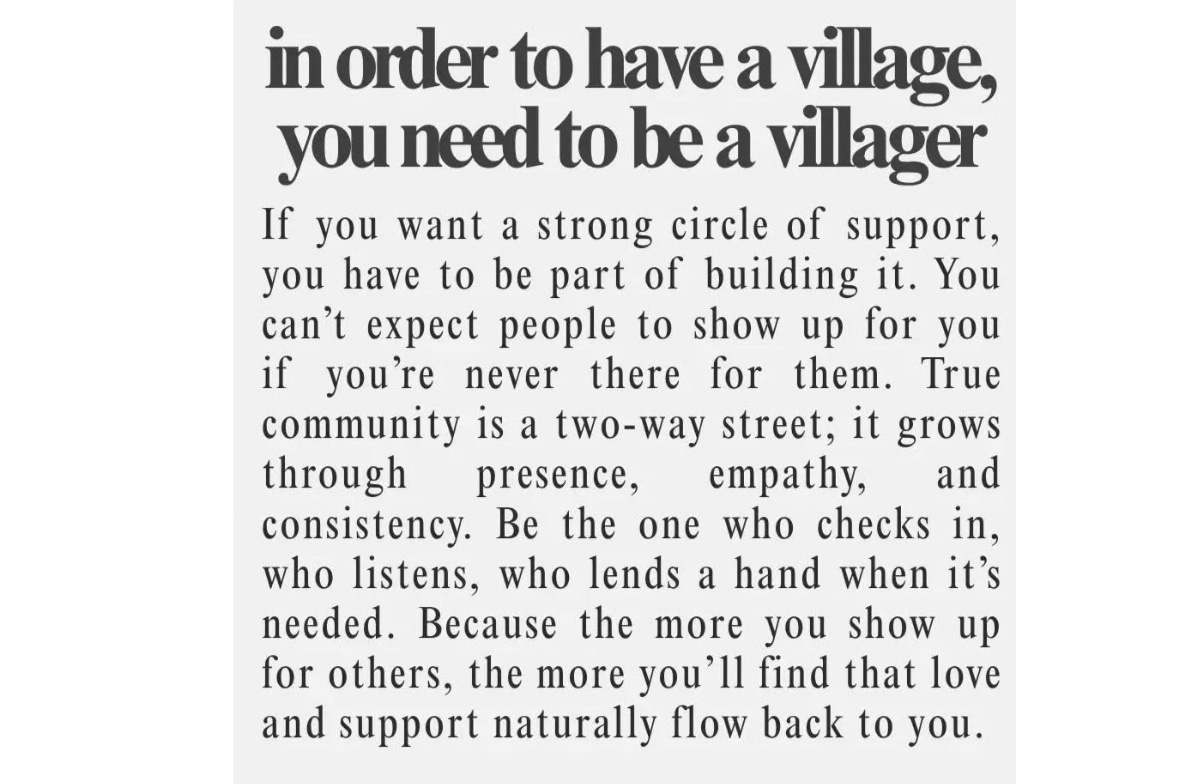
^(Another great Pinterest find!)
- Move to 1-on-1s: Follow up one-on-one with individuals who spark your curiosity. Try a message like “I really liked your point about X, want to chat for 20 minutes?”. Don’t be shy! You will never regret shooting your shot but you will regret not doing so! Make it a goal to reach out to active members — potential mentors, mentees, or synergistic peers who share similar goals or challenges – for a quick 15-to-20-minute virtual coffee chat.
- Show Up Consistently: Focus on depth over breadth. A handful of strong, reciprocal relationships will always create more impact than hundreds of surface-level connections. Keep your calendar manageable: prioritize quality over quantity, leaning into one-to-few high-impact interactions rather than broadcasting to a crowd. You don’t need hundreds of contacts; a handful of people can make a real tangible difference in your life and career. Remember the feeling of ‘belonging’ doesn’t come instantly it comes by showing up again and again, and reciprocity.
Finding your career community on oyster
This is my shameless plug but in my defense this product has been YEARS in the making. I’ve had the idea since college. It has been a lot of hard work and even more love.
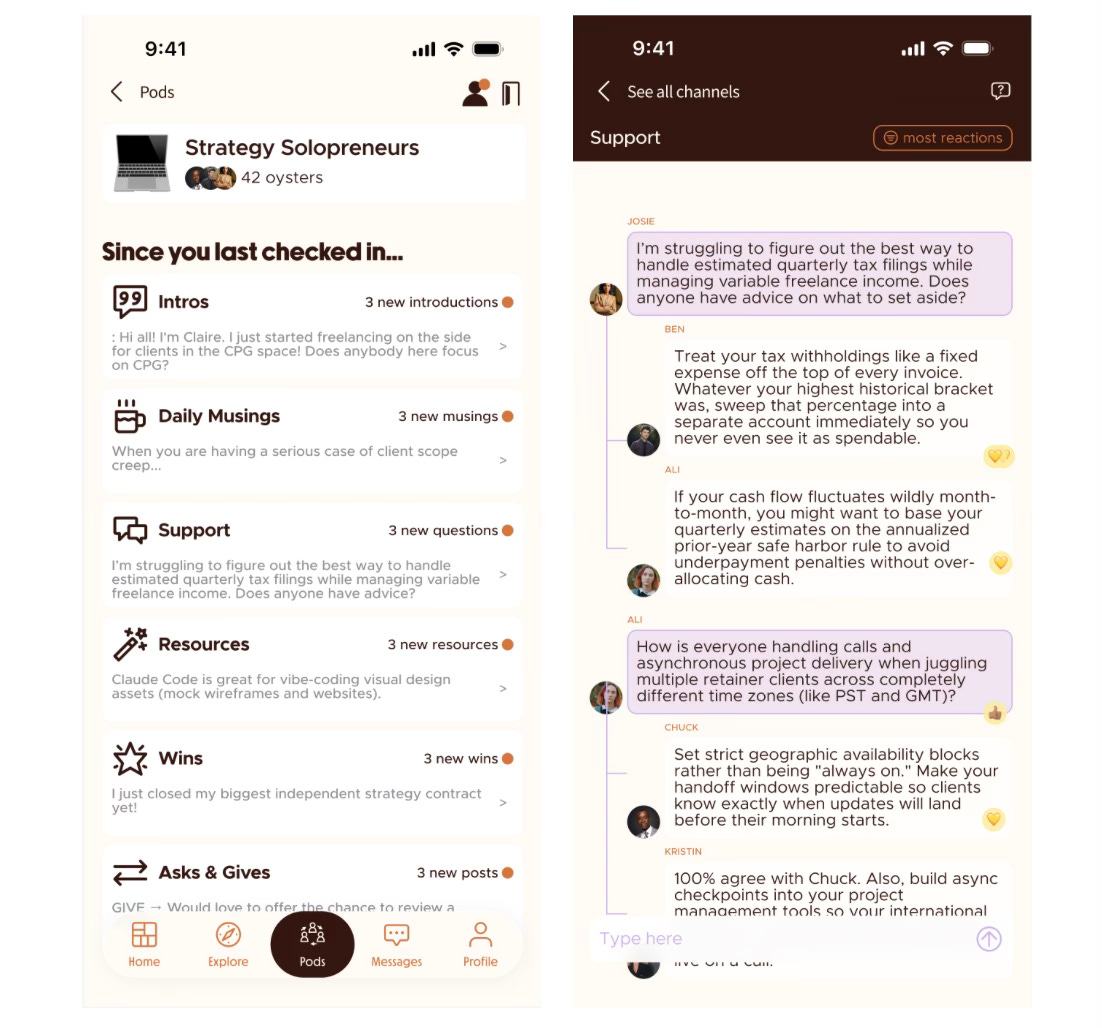
I’ve tried SO. SO. many digital, online communities, but kept running into the same issues with discoverability, trust, authenticity, and scalability, so I built my dream career community tool. One curated to what you do, easy to find, easy to navigate, easy to share resources, easy to move into 1:1 chat settings, and most importantly: easy to keep coming back to.
I also recognize the reality that there is likely more than one career community you will want to be a part of as an increasingly majority of in 2026 are multi-hyphenates with side ventures. What’s beautiful about oyster is that it’s an aggregation of every career community, so you’ll be able to access yours in one place. No more managing a mix of hodgepodge chats in Slack, What’sApp, Reddit, iMessage, etc.
Here are a few more details about the oyster ‘pods’ or micro-communities:
- Over 400 career micro-communities! Unique to industry, location, career stage, role, and more. ‘Pods’ fall into one of 6 categories:
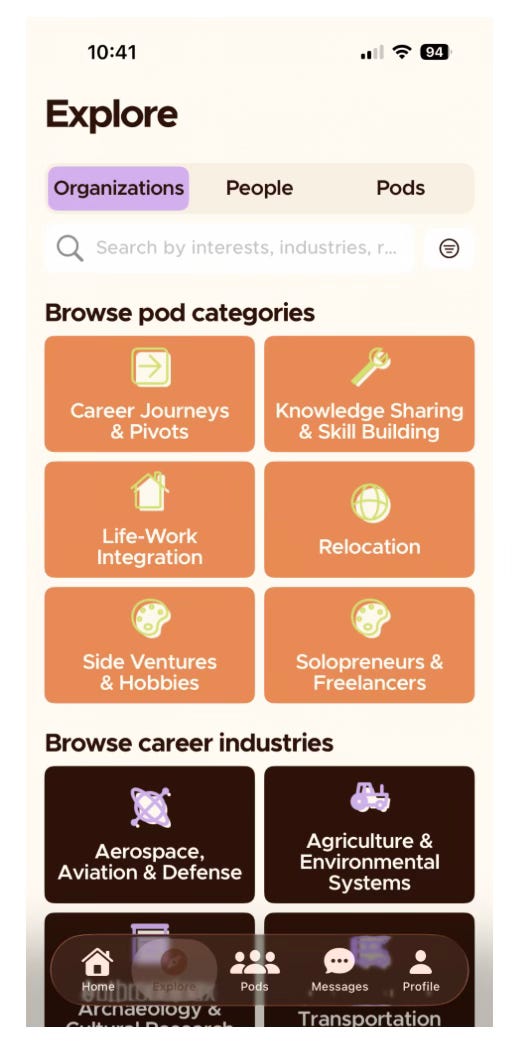
- Ability to see users complete career journeys on their profile. 9-5, side ventures, and hobbies included. Plus fun career prompts & photos of their work in action!
- Ability to go into a 1:1 chat setting with members with recommended discussion questions to keep the vibe exploratory and laidback.
- Dedicated forums for:
- Introductions
- Support
- Resources & Events
- Asks & Gives
- Wins
- Daily Musings (memes and shower thoughts only your community would understand)