

(originally posted on our Founder Makena's Substack)
In this economy pursuing your dream job can sound like wishful thinking. But if you follow me on Substack, or just happened to stumble upon this post you know I’m all about opening our aperture to abundance while ALSO staying incredibly strategic in our approach.
I was inspired to write this after collecting these strategies for a while, but my recent Career Crush conversation with saxophonist Evan Jacobson solidified them for me. He took similar steps to achieve his dream of making a living as an artist in NYC.
1. Get as close to your dream space as you can.
Can’t go solo as a full-time musician yet? Get as adjacent to the field as you can. Work at a music-related organization: a record label, a startup in the music space, a local music business.
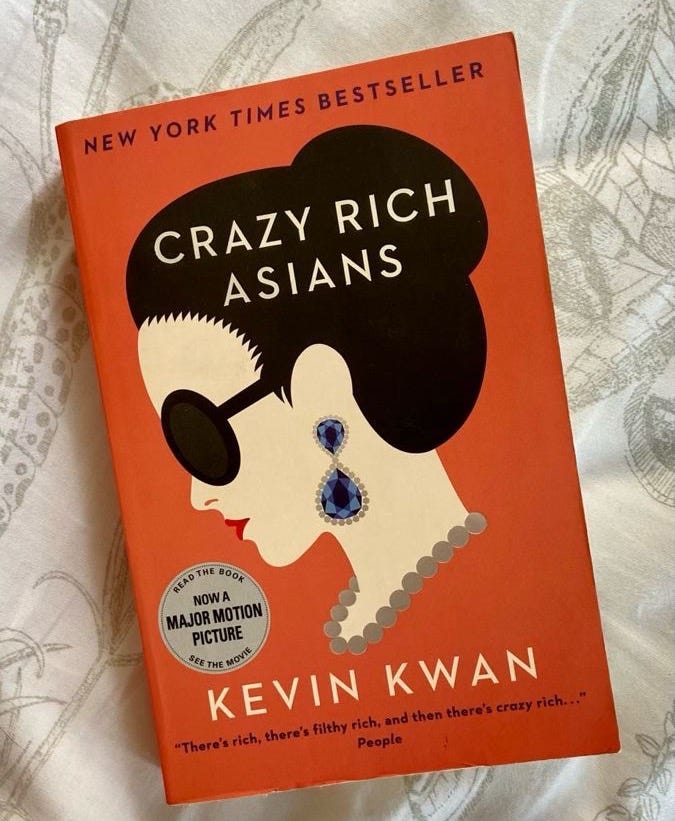
Take Kevin Kwan: long before writing Crazy Rich Asians, he worked in visual design consulting and made coffee table books for people like Oprah. Those visual skill sets sharpened his immersive storytelling capability and built him a ready-made rolodex of contacts to leverage for when his novel was done and dusted. (And no doubt helped him turn his novel into a successful major motion picture!)
If you can’t do your dream job right now, work on getting as close to your dream space as possible. Find an adjacent space where what you are doing is a synergistic value add to your dream role.
2. Build up your network of people who are in your dream space.

You know what fall is the perfect time for?
To get your coffee chat on.
There is value in actually NOT jumping straight to your dream job right out of the gate (especially as these tend to be entrepreneur or solopreneur roles) because you have time to build up a safety net of strong, supportive relationships who might one day help you bolster and de-risk your dreams. *cough, cough Kevin Kwan
You should be coffee chatting all. the. time. whether you love your job or hate your job. Hit up people that fascinate you in your dream space for 20 to 30 minutes (in person if you can, virtual if you must) to pick their brains on how they got to where they are, what they like, what they don’t like, advice, and recommendations. Then, follow up. That is how you turn a one-off chat into a sticky and meaningful relationship.
Nurture your network each day. Connections quietly catalyze into opportunities when you least expect it.
3. Cultivate a POV on your dream space.
Read books, binge podcasts, and try to talk to experts relating to your target industry or organization.

Build a sharp perspective on how the dream space you want to enter is evolving and where exactly you might fit in.
Cultivate your voice or “brand”. It sounds cliché, but it’s a non-negotiable in 2026 if you want to stand out. Shape a distinct set of “offerings” or skill sets/projects you might bring to the table.
Stay obsessed with the future of your dream space, but also understand its history whether it’s marine biology, screenwriting, or forensics.
4. Build up a body of work in your dream space.
If nobody is hiring you yet to do your dream job, do it anyway. Nothing is stopping you. I repeat: NOTHING is stopping you.
Can it start as a side venture? A hobby? A passion project?
Evan made sure his 9-5 full-time position still gave him enough time and headspace to create content, write music, and play in his band.

When I wanted to break into emerging tech in the film and entertainment industry, I didn’t wait for an invite: I built a comprehensive report mapping out AI, IoT, AR, and VR use cases with commercial rationales.
Want to break into VC? Create a deck spotlighting the portfolio of startups you’d invest in.
Want to be a journalist? Publish a recurring series on Substack on the topics you want to specialize in.
Don’t wait for the job to do it. Do the job now.
5. Persistence and determination.

Consistency compounds, so stick with it. We all start at zero, and piece by piece we grow from there.
Also, expect your dream to evolve. Over time, Evan realized record deals actually weren’t the ‘holy grail’ landing for a career in music.
I realized grinding it out in a massive corporation wasn’t the only path to a career in film and entertainment.
Strip your dream down to its barest, simplest form: to play, to write, to build an MVP.
Often, the dream is already within reach if you stop overcomplicating it.