Name: Evan Jacobson
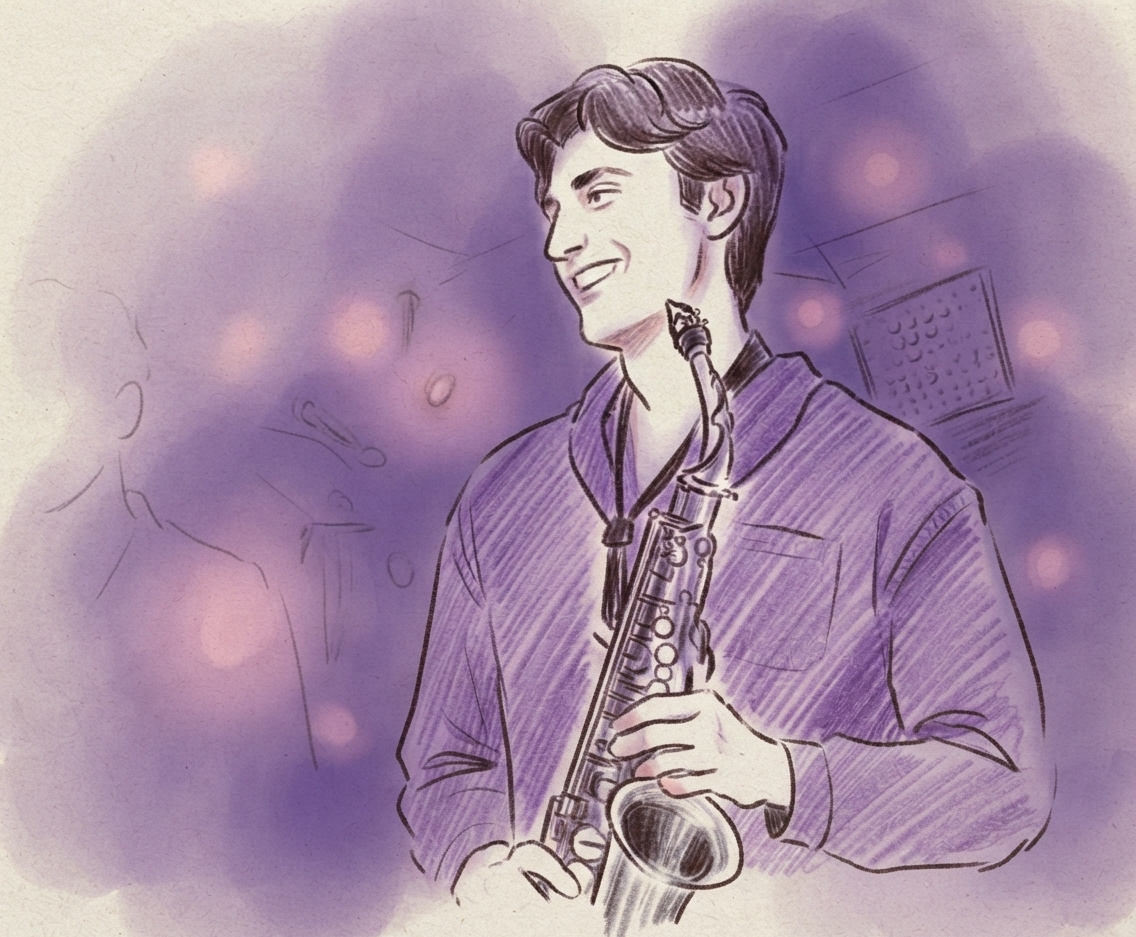
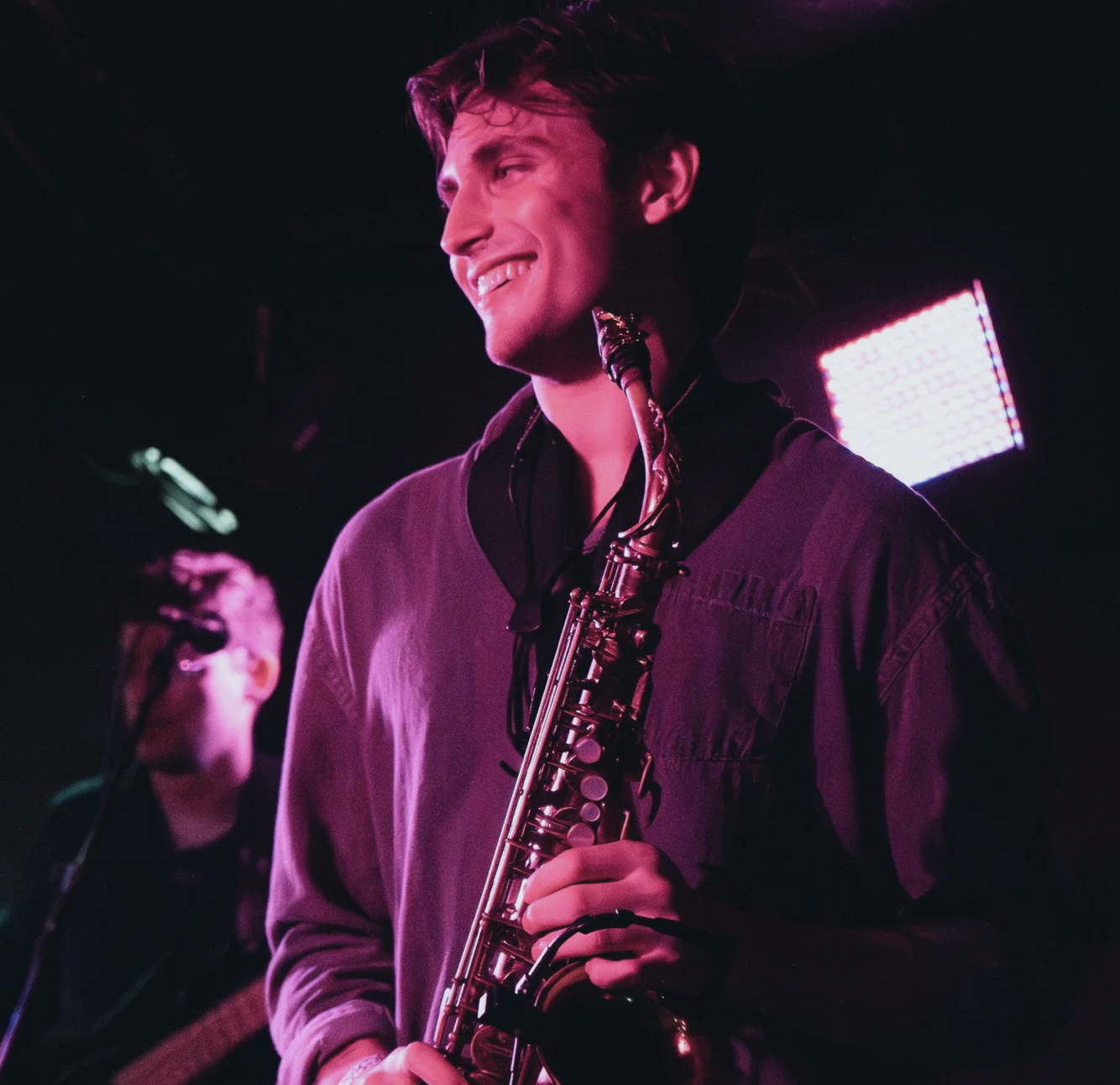
Job: Musician: Saxophone. Also, music-business freelancer, helping artists develop and grow their online presence.
Current career status: Newly pivoted to flexible freelance work-life after four years in a full-time position in an office environment.
Location: Brooklyn
Links:
THE DREAM JOB
Makena: What was your dream job as a kid? How close is it to what you are doing today?
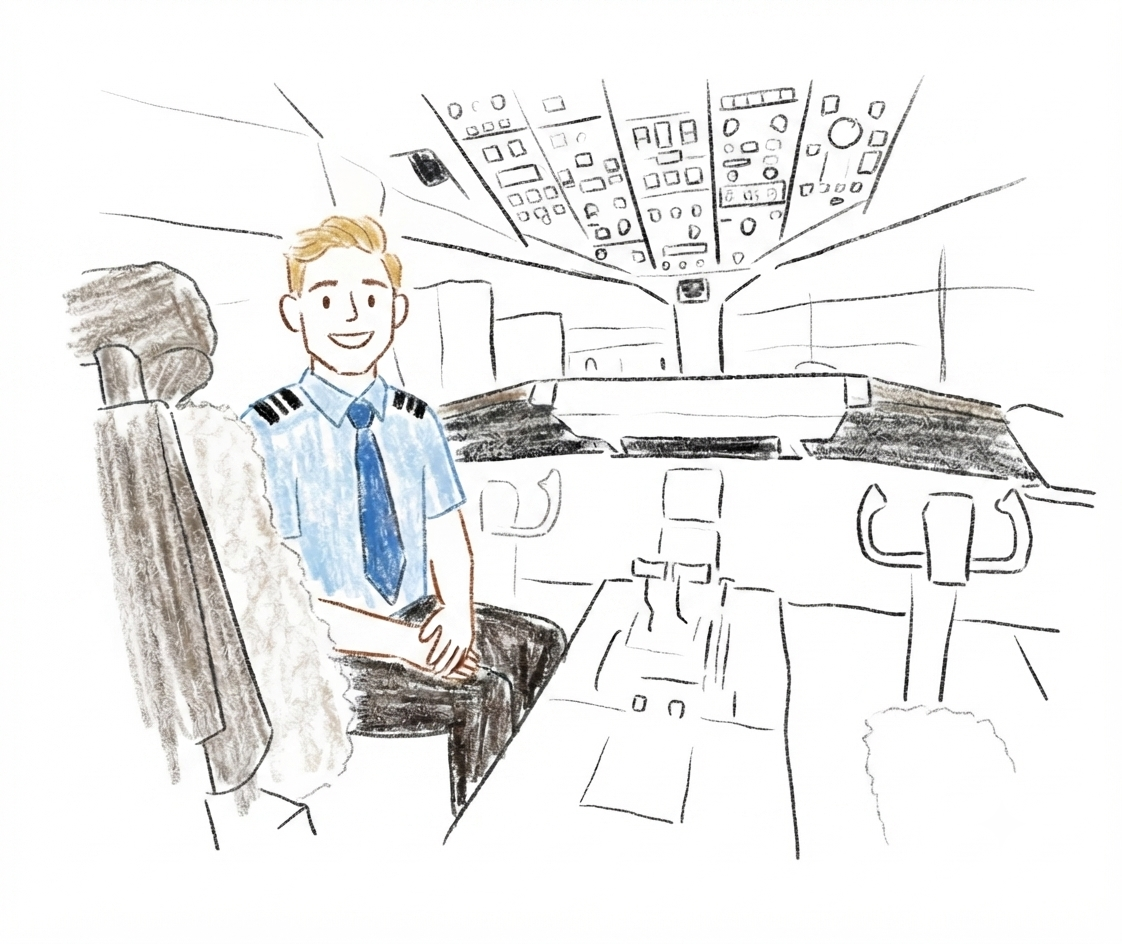
Evan: A rock star. Just to be on stage in front of thousands of people, playing music that people love.
There are moments today in my career where I feel like I have that which is lovely and amazing. But the reality is 1% of my time is actually spent on stage. A lot of it is just admin and ‘regular’ work stuff.
M: Do you have a dream job today?
E: Not really. Just something that gives me the freedom to work for myself, not be in an office everyday, and make music on a regular basis. Ultimately, that’s my dream – to make and perform music that I and others love.
THE ORIGIN STORY
M: Let’s back up. You graduated from NYU about 5 years ago. Can you talk me through how you navigated the post-grad journey?
E: I knew I wanted to continue playing music as part of my job. Music has been such an integral part of my life from how I grew up to what I studied. But I didn’t want to immediately try to go solo or do freelancing because it’s not always consistent or reliable, especially for someone just starting out. I’m also someone who values security in a job. So, I ended up getting a full-time position at this company called Primary Wave.
I was stoked because it was in the music field, adjacent to my ultimate goal: to make as much music as possible. I worked there full-time from 2022 to 2026, leading their TikTok and Instagram Reels, running short-form content strategy for different artists. It was great and I learned a lot.
And then, always on the side of that, I was continuing to do my own TikToks, playing in a band. I also started releasing my own solo covers project.
M: How did you know it was the right time to make the solopreneur business-musician leap?
E: The whole time I was working full-time, I was trying to figure out ways to make playing and performing music more a part of how I make a living rather than just something I do on the side.
It was about a year ago, I started considering, "Well, I have these social media skills and run pages for artists, I want to see if I can strike out on my own and do this.” I started taking on freelance clients very informally through personal connections and people I met.
Things started to pick up and get busier. I also started getting a lot more inquiries to play at weddings and corporate events. Additionally, I had some recurring streaming income coming in from Spotify.
I kind of just did simple math: I'm spending all this time in the office and I feel like if I could devote my time elsewhere, I could have the freedom and ability to make a lot more music and not take too much of a pay cut.
I thought it had to be all or nothing, so I was surprised when I went in to quit that my boss was really nice. He liked and appreciated the work I was doing, and wanted to figure out an arrangement where I could stick around.
Now, I consult for Primary Wave part-time doing the same stuff I was doing before, but it is much more flexible. I don’t have to go into the office. I have more time to do media management for other artists, social media content, play at weddings and corporate gigs. I also have more time to write as much music as possible and put stuff out with collaborators.
M: It sounds like you have at least five income streams running in parallel: 1) Consulting for Primary Wave (former full-time employer), 2) Freelance social media management for other artists, 3) Wedding and corporate performance gigs, 4) Spotify streaming royalties, 5) TikTok…What would you say are the biggest challenges to managing all of this?
E: Staying consistent on tasks where I report to myself.
I always feel a need to prioritize the work for my old boss or freelance clients because I am reporting to someone else. I really enjoy that work, but find sometimes the work that is honestly most important to me tends to get sidelined. I'm trying to remind myself just because I don't have to report to a boss on those tasks doesn't mean that it's any less important.
Another challenge is that I have a lot more flexibility now in terms of my own schedule, but in a way that kind of means you have less flexibility because you really have to lock in your routine, which I'm not amazing at yet. I'm still working on it.
M: Relatable.
THE REALITY
M: I’m sure every day is different, so can you give me an average week-in-the-life?
E:
- Tuesday: in-office at Primary Wave in Manhattan
- Mon, Wed, Thu, Fri: mornings (3–5 hrs) on freelance/client work; afternoons in the studio where I do social media content for myself, work on recordings, write music.
- Mon and Wed: band rehearsals 6:30–9:30pm
- Thu/Fri: heavy studio and recording days
M: Top 1-2 things you like the most about your career right now.
E:
- I love not going into the office everyday. I used to do that four times a week, and it just wasn’t for me. I love that I get to be where I want, when I want 80% of the time.
- When someone sees a piece of my content and they want to hire me for something whether it’s a recording of their song, to play at their wedding, or they are having a corporate conference in some part of the country that I've never been to before and I get to fly out for a day…I love doing that. Devoting more time to social media has paid off in that it has brought in new opportunities and allowed me to be more intentional with what I am doing when.
M: Top 1-2 things you do NOT like about your career right now. You mentioned admin stuff earlier. What about taxes?!
E: You know admin stuff is annoying, but I am enjoying learning about it. It’s kind of fun to do it for myself rather than someone else. It’s cool getting an understanding of what an LLC is and trademarks. Other admin tasks like updating my website I don’t necessarily love but it still feels interesting and personal to me.
With taxes, I actually just had a meeting with a financial advisor, and will hopefully get an accountant soon. Health insurance is more expensive as a solopreneur, but you know, it’s worth having.
I’ve kind of been winging it since I made the decision to go ‘solo’ in April, but everything's relatively organized. My approach to admin tasks is to do it and then fix it later if you need to. I am a classic overthinker and have been my whole life, so I’m intentionally trying to take the approach of just do it and you can always go back and fix it. Just keep moving forward.
THE HUMAN SIDE
M: Sounds like you're researching stuff, but do you have people you can turn to for advice on some of the admin questions? What are your thoughts on A.I.?
E: I definitely lean on my ‘human resources’ first. If I have friends who have dealt with some of the same stuff: applied for an LLC or gotten their business credit card then I will hit them up.
I'm not a huge fan of A.I. for research, but I am a bit hypocritical in that I do use it for tax and trademark questions. I also used it to figure out how to make sure emails don’t go into spam folders when you're sending an email from your company website from a Google workspace. You have to change the code in the back end. No one that I know knows how to do that and there's not a ton of great resources online, so I will use AI for questions like that. But overall, I try not to use it if I can help it.
M: What’s your work-life balance like?
E: Pretty good. I'm fortunate that a lot of the “work stuff” is fun and enjoyable for me. I love going into the studio and recording. That’s typically half or sometimes two-thirds of my day. That doesn't feel like that much of a stressor.
A lot of my socializing too for work is done with my band who are also my friends, so it blurs the line between working and hanging out which is nice.
I genuinely like working: having a goal and then working towards something. Being hungry. That keeps me motivated to produce more stuff creatively. I am really trying to max out working and socializing because you are only in your 20s once.
M: What you do is so unique, but do you have a peer community you can lean on of others on similar career journeys?
E: I don’t know anybody doing the exact combination of what I do. Most people are either fully on the music business side or fully on the performance side whereas I have sort of blended them.
That said, there's a couple people in my life who I feel like are in similar situations – trying to make music and art, but also trying to make a living at it, which is a balance in itself.
One person in particular comes to mind. I was jamming and chatting with her yesterday. She's a great saxophone player, and recently her project went viral. She got a huge record deal and is about to tour with Fred Again. Prior to that, she was also working full-time at a major label. She’s a good example of someone who has been able to be successful working a full-time job while also trying to hone their craft and build out a music career.
There’s also a guy who's ‘solo-ing’ with me named Will. He also has a collection of jobs and freelance projects he does to prop up all the music that he wants to do. I work with him most frequently.
It’s nice to know other people who are aware of how difficult it is to make money doing music. It really is so hard. So, it’s fascinating that now more than ever people are getting creative with that career path – combining being a musician with other aspects of a professional life.
M: Having people you can turn to that understand the day-to-day challenges can not only help you feel less alone, but also when someone wins, you all win.
E: Especially now where it’s not as clear cut being an artist. Like how do you become a musician? Does that mean you're doing it for money? Does that mean you have some other job in addition to music? Or are you just doing music purely for the fun of it?
I think it probably means something different to everyone. People are just finding ways to make it work. It’s a tough business, and people have to get pretty creative with how to make it work.
THE FUTURE & ADVICE
M: If you got a record deal, like if one day you get that big advance sum would you quit freelancing, the corporate gigs, all of that?
E: I had a pretty negative experience personally with record deals. I would definitely be cautious about relying on a record deal to come and ‘save me’, so to speak. It’s not always the case, but I’ve seen how predatory they can be. I know there are some labels genuinely advocating for artists, but in my experience it is very hit or miss.
I think in an ideal world, if it comes to a point where I'm getting really cool opportunities to go play in different places around the country or around the world, and it's interfering with my ability to do all the tasks for my old boss then I would definitely be open to a situation where I am potentially putting the other facets of my career on hold to play more music.
I just want to fill my life with music as much as possible. That’s the goal.
M: It’s refreshing to hear you speak candidly about the record label experience. So many people speak of the highs, but it’s rare we hear of the lows, and experiences are often shades of gray. I’m thinking of Chappell Roan and her speech at the Grammys earlier this year.
E: I think the industry has changed a lot. Bands aren't breaking the same way that they did in the 90s where someone from a label will go to a show with 50 people and be like “Oh, my God, this is the next big thing!”
Today, YOU as a musician have to do a lot of the heavy lifting to build up your own fan base online and organically – that’s when a label will come in. And, even then, it's not always a guarantee of success.
Sometimes a label will put you in touch with cool producers, give you access to top musicians, put you on an arena tour opening for a big name artist, but the reality is most big record labels are making money off of just the few acts that do succeed. They don’t pay much attention to the other 90% of artists who aren’t making them as much money. It can be difficult for those 90% of artists if you have signed the rights away to your music or you are in a position where you can’t recoup on your advance. Artists can end up stuck in those deals.
I've had some good learning experiences. I definitely know what to look for now. You just have to be smart and cautious. Unfortunately, there's a lot of predatory people out there.
M: This is a really important reality check. Thank you for sharing and highlighting that the be-all-end-all for musicians is not always to have a record deal.
What excites you when you think about the future of your career?
E: The thing I am most excited about is also the thing I am most scared of because it’s as vulnerable as you can be: putting out more music under my own name and my own project. I've done a bunch of collaborations: I'm in a band, I'm in a duo, I do my covers project, but I've never released my own music just under my name only. I really want to do that.
It’s great to have all these different collaborative projects. I love it, but I feel like there's more steps for me to take in terms of sharing my artistic voice – my ‘product’ – with people. I honestly don't even know what that would look like yet.
M: That’s so exciting. You are truly bringing love to the saxophone - I had no idea how beautiful an instrument it was until I saw your videos and saw your show! Do you think your solo projects would just be the saxophone or would you sing? How do you envision your solo career playing out?
E: I don't fully know yet. I think I'd like to have it be somewhere in between singer-songwriter, but with a really jazzy influence. I can sing, but I've never put anything out with me singing on it, so I don’t know…
Right now my version of that is this side project that I'm doing with Will. It's a jazz house project. He's a house producer. I'm a jazz musician. We came together and made this new music. We’re both writing a lot. It’s great to have a collaborator on that. So honestly, I'm gonna just keep doing that for a while and try to get some movement on that. And then, I’m not sure what’s next. I feel like I'll probably have a variety of different musical projects in my life.
M: Advice you would give to someone pursuing a similar career journey?
E: A few things:
1) A lot of my career has been in direct correlation with social media. I think you have to be willing to be a little bit cringe when it comes to social media. Put yourself out there and create things.
2) Have technical skills. Get to a baseline level of video editing competency. You'd be surprised, most people do not know how to use iMovie or CapCut to make simple content. One thing about the music industry these days is that everyone has to have social media content. It’s hard to post the amount of times that is required to satisfy the algorithm – there are positives and negatives to that – but if you can be a content resource for yourself or other artists that's a huge asset.
3) Spend a lot of time practicing, but also spend a lot of time connecting with people and doing administrative work like sending emails. A quick win is responding to things right away. A lot of people in the music industry are slow to respond. I don't know if that’s a music industry thing or not, but if you have an approach of responding to things on time, and being polite and professional – that will automatically put you in a good position for getting opportunities.
M: And following up! Sometimes it’s not the first email but the third.
E: Yes! Like a huge win is just writing an email to someone after they hire you for a gig. Like: “Hey, I'd love to work with you again.” Then they will respond: “Oh, as a matter of fact, we’d love to have you back for this thing next month.” It’s really sometimes that simple.
M: Any recs: podcasts/books/newsletters? Other?
E: There’s been a lot of creators recently who are making content specifically for musicians like “five visual hooks to use at the beginning of your video to keep people sticking around” or “how to use visual storytelling to promote your music”. It kind of sucks you have to play the TikTok game, but you know – you have to. It works.
M: What is driving you: Money, collaborating, creating?
E: I discovered that music made me feel really happy and fulfilled at a young age. I think subconsciously I’ve always wanted to share that experience with other people.
It's not that I'm thinking about that every day, but I think subconsciously that's the driving force behind it. I just love the way that music makes me feel, and I just want to share that into the world and hope it carries out.
CLOSING
Speaking with Evan and learning about the life of a musician in 2026 was not only eye-opening but INSPIRING! In a world of uncertainty, it brings so much hope to chat with people like Evan, who are working incredibly hard, being creative when it comes to their professional life, taking advantage of tools like social media, and maintaining the discipline and determination to pursue their dreams each day.
Would just like to say that for the record too that Evan seems to have accomplished his dream job at 20-something years old – “something that gives me the freedom to work for myself, not be in an office everyday, and make music on a regular basis“ – so you go Evan! Hopefully this conversation encourages other prospective musicians trying to carve out their path or anyone pursuing an unconventional career path to stick with it.
And be sure to check out Evan’s music to brighten your day! Highly recommend listening to ‘Catamaran’.
Links: