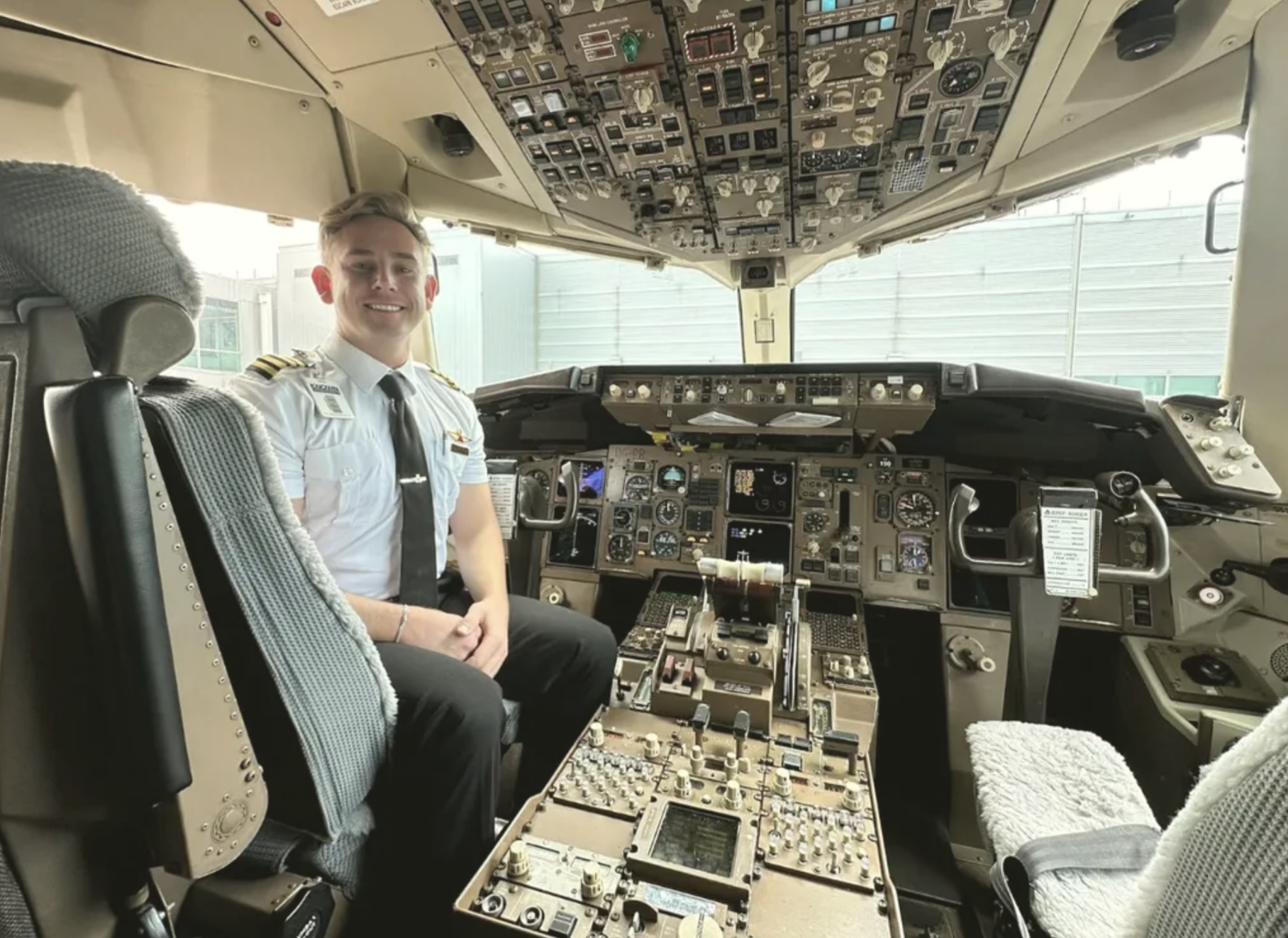
A in-depth conversation between Delta Airlines Captain, Brandon Gretch and oyster Founder, Makena Naegele.
CONTEXT
A few weeks ago, my mom took a flight from NYC to LA. When she got to her seat, she saw she had received an incredibly kind handwritten note from the Captain, and shared it excitedly in our family group chat:
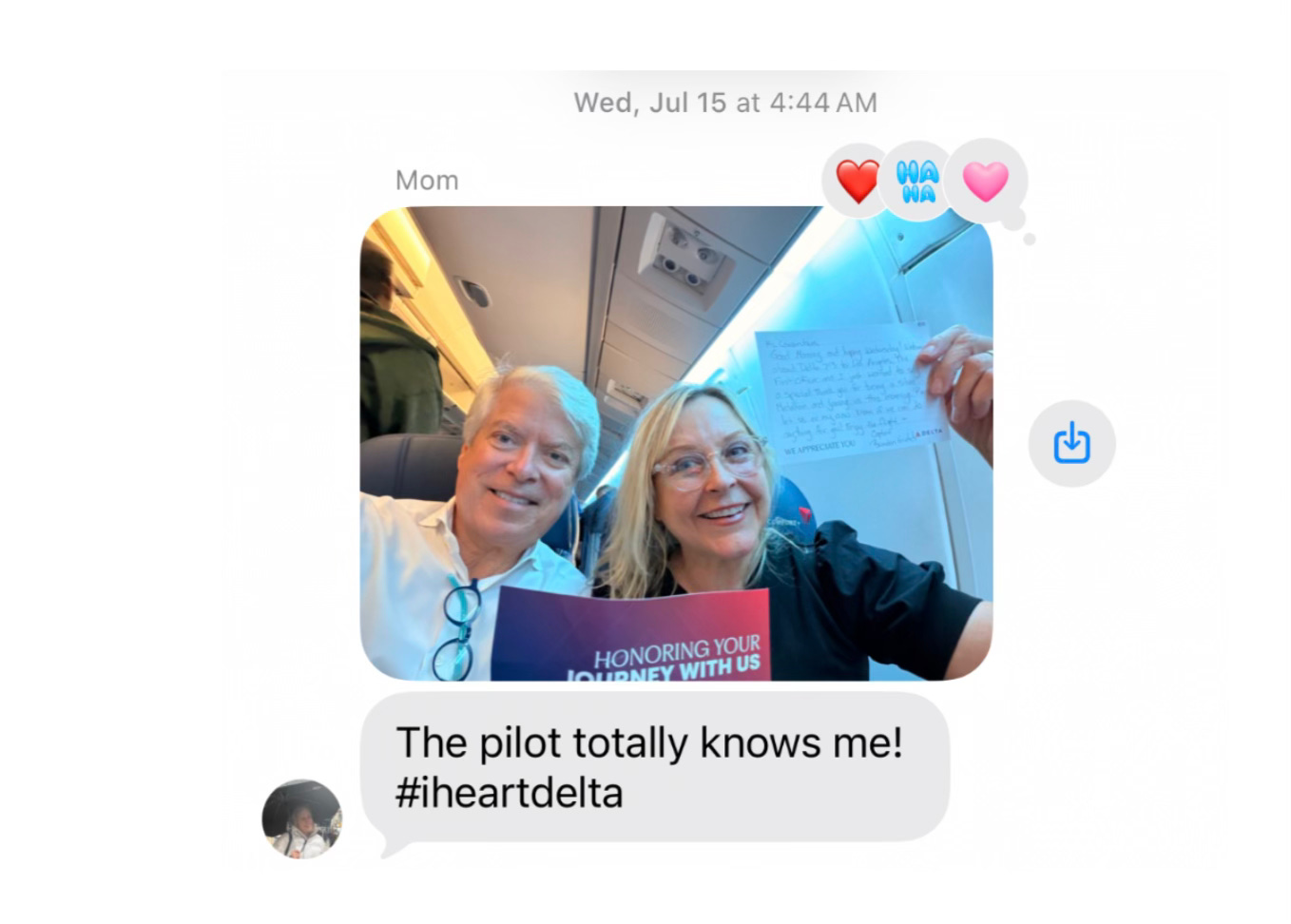
I saw the Captain’s full name on the card and looked him up out of curiosity. We seemed to be in the same age bracket, which meant he’d likely known his calling early on. Immediately intrigued to learn how he navigated the journey, I texted my mom to see if she could shoot her shot for me…
As Founder of a soon-to-launch career discovery and community app oyster, part of my brand building effort includes spotlighting niche, impactful paths in a new blog series I’m calling oyster Career Crush. The reason why I started oyster is to expand our aperture of the career paths we think are possible, and bring a sense of agency and joy back to that thing we spend one-third of our life doing: work.
My approach with the Career Crush chats is simple: Learn about a career path and break down what it actually takes to get there. It’s almost like a career BTS or a ‘Dream Job Detective’ because for many of us we need to see it to believe a career is actually feasible and achievable. The path to becoming a Pilot is one I’ve always been personally curious about, and know very little about, so I was excited when Brandon replied back “Yes! Happy to chat.”
Brandon could not have been more gracious with his time. I was lucky to catch him right in between flights from Maui and Berlin. His enthusiasm and passion for being a Pilot, a Delta ambassador, and encouraging others to pursue a career in aviation (which he does by attending campus career fairs among being open to taking calls like this) was palpable. It was truly an honor. Delta is very lucky to have him!
That said, I’m thrilled to share our conversation! It’s broken into 4 parts:
- THE ORIGIN STORY - the career ‘spark’, what aviation school is like, and the steps Brandon took to get to Delta (interview tips included!)
- THE REALITY - skill sets used, key aspects of the job, work-life balance
- THE HUMAN SIDE - insight into the career community, mentorship, and flight team
- THE FUTURE & ADVICE - what growth looks like, parting words of wisdom
Regardless of whether you want to pursue a career in aviation yourself, it’s a fascinating conversation. I learned so much, and while I already had the utmost respect for Pilots, I walked away with a newfound appreciation for what it takes to become one. If anything, Brandon’s energy will rub off and leave you feeling inspired and empowered in whatever career path it is that you’re on.
THE ORIGIN STORY
M: What was your “dream job” as a kid? How far is that from where you landed?
B: (laughing) Captain at Delta.
M: You’re kidding! That’s insane! Do you remember what first sparked that feeling of ‘oh, this is what I want to do’?
B: For as long as I can remember that’s what I wanted to be. Every Halloween for 6 years I dressed up as a Delta Pilot. We flew a lot East to West Coast because of family, so maybe that had something to do with it.
M: Were any of your friends or family in aviation?
B: No, although they were very supportive of my dream – my parents, grandparents, and aunt.
M: How did you figure out the steps you needed to take to achieve this dream? How does one become a Pilot?!
B: Well, my mom did a lot of research because she knew this is what I wanted to do from a young age. She figured out that the first thing you need to do is something called a First-Class Medical, which basically means you have what it takes from a health perspective to be a Pilot. I did this when I was 16. But the thing is, I was born with a hole in my heart (called a ventricular septal defect, or VSD), which is a disqualifier for being a pilot. I did have open-heart surgery at 14 months old, but I still wasn’t sure how the exam was going to go. I loved architecture, so I had started thinking about that as an alternative path…but then I met with the FAA. They did stress testing, which took about a year, and I came out hitting the 93rd percentile!
M: It’s like you told your heart: We’re doing this no matter what!
B: (laughing) Yes! Exactly. Not giving up!
M: This was when you were 16-17?
B: Yep, when I was in high school.
M: Wow, you were really on top of the process. After the medical exam, what were the next steps? Do you have to go to college?
B: The great thing about flying is you don’t actually have to go to a university! There are schools that specialize in airline career tracks specifically designed to get you through all the ratings you need in a year to become a Pilot (there are 6 ratings, see in Appendix!). ATP Flight School is the largest, but there are many. Most offer financing too if needed.
Then there is the university path, which is what I did. Embry-Riddle down in Daytona is a big one. But there are universities all over the country that offer a degree in aviation: Arizona State, Purdue, North Dakota, Auburn…I personally knew I wanted a big university, 4-year degree experience. I also wanted to be somewhere warm, coming from the East Coast–
M: So naturally Arizona…
B: Yes, being out in the sun!
M: Were you in a class doing pen and paper work or was it more of an apprenticeship where you were out in the field studying Pilots?
B: On the first day of college we got to hop in an airplane! I like to say being a Pilot is the equivalent of being in a D1 sport. You go to class and then have flight school afterwards 3 to 4 days a week.
M: Was there a big aviation community on campus?
B: So, I did Aviation Management with a concentration in Professional Flight. The larger program Aviation Management is much like how you have nursing or business as the overarching discipline but then there are specific concentrations within. Professional Flight is a specific concentration for those that want to become a Pilot and it’s much smaller. Everyone knows each other. We’re all going through the program day-in and out together, and it’s not an easy program.
M: I bet that binds you together real fast. What were the instructors like?
B: Instructors were from the industry. We had Pilots from Southwest who taught on the side. Everyone had actual expertise in the field, which was exciting. Being in college, and learning from people who were out there doing it.
M: That would be exciting, it makes it feel real! What was the hardest hurdle you encountered along the way?
B: Probably the mental barrier. Juggling college core coursework like mathematics and history, plus having two jobs to pay for school, studying, and then flight school after class…the technical part of learning how to fly can be challenging too. It looks easy, but it’s not. You’re not sleeping much during that time.
M: I can imagine. Not to mention you’re also 20-years old trying to have a social life, maintain friendships, and date!
B: Exactly. You will hit that mental block at some point in the journey. For me, it was junior year of college.
M: How did you overcome it?
B: (laughing) Well, I was three years in, so…
M: Ah, the classic sunk-cost fallacy.
B: But I also had a lot of support from my parents, which was huge. Being a Pilot is not a single-person sport. (D1 analogy!) It’s basically a full-time job, plus being a student.
M: After graduating college, was it straight to flying or did you take a break?
B: I love volunteering, so I made time for that. At ASU, I was Vice President of a non-profit club called International Service Devils where we would travel across the world supporting local schools and communities in Vietnam, India, and Thailand. Doing things like teaching English, clearing waste, and building infrastructure. I also always wanted to go to Australia because it seemed so far away. I worked up a lot of miles by that point, and used them to take not just me but my friends. It was great!
M: Love the name of the club: Service Devils. Very meaningful work. Also, wow, I need to find a friend in aviation like you! After taking time to volunteer and travel, how did you approach getting a full-time job?
B: In order to work at an airline as a Pilot, you must have 1,500 flight hours in addition to your ratings and certifications. You can get those hours in a number of ways: crop dusting, aerial surveying, banner towing, etc. You can choose whatever works best for you. One of the most common routes is flight instructing. That’s what I did: I spent 1,500 hours instructing at ATP Flight School and ASU before being hired by a regional airline called Compass. (Major airlines like Delta typically require years of flying experience whether from regional airlines, the military, or corporate/private aviation.)
I flew with Compass for 18 months as a First Officer, until they unfortunately collapsed at the onset of the COVID-19 pandemic. Because cargo was a booming sector, I pivoted to Atlas Air, a cargo and military charter airline, and was hired as a First Officer to fly the Boeing 767. I learned a lot, gained a ton of valuable skills, and even spent an exciting four months based in Frankfurt, Germany. After a couple of years at Atlas, I applied to Delta, my dream company. I was hired as a First Officer, and three months ago, I got promoted to Captain!
M: Congratulations! Staying determined and achieving your dream job despite global turmoils like the pandemic is no small feat. Can you speak a bit about what the interview process is like for an airline?
B: It can be rigorous. Flying is a fun but tough job with a lot of responsibility, so it’s not taken lightly. Interviews are usually a full day, sometimes two days and involve panel interviews, cognitive and personality tests. Some have a practical test where you fly a simulator. Every airline is a little different, but all have the same end goal: Hire applicants who not only can fly airplanes, but can lead a team and take care of travelers while going from point A to point B as safely as possible.
M: What can help you stand out as a candidate?
B: My biggest piece of advice is to get involved in community service and extracurricular activities. I personally have volunteered with Habitat for Humanity, Feed My Starving Children, and my local food bank during the holidays, alongside serving in hiring departments and as a new-hire pilot mentor at Compass.
An applicant committed to making a difference both in and out of the workplace truly stands out, as it speaks volumes about their character. Because airlines are huge drivers of community, giving back proves you bring added value and will care for our passengers.
Military service is another huge asset. It shows you are disciplined, work well under pressure, and excel in a team environment. Coming back to the D1 analogy, flying is the ultimate team sport. It takes dozens of people to dispatch a flight, and the Pilot essentially acts as the team captain.
M: Any interview tips or best practices?
B: Smile and be kind. A smile is infectious. Being able to bring that every day onto the aircraft can change the entire dynamic of a flight. When I was interviewing applicants, I always appreciated people who smiled and showed their genuine passion: how hard they worked to get there and how excited they were to fly.
I also think, for a career of this magnitude, it’s a good investment to reach out to consulting companies that specialize in airline resume building and interview preparation. They can help make sure your application is well-rounded and reflects who you are. They can also practice interviewing with you, so you feel more confident walking into your airline interview.
THE REALITY
M: Beyond technical flying skills, what non-technical skills are essential?
B: Being able to go with the flow. Having an open mindset. A lot can happen and change on the job. Some people like rigid structure in a job, but the reality of being a Pilot is that things are always changing. Sometimes there are weather delays, reroutings, or a medical issue on board. You have to be able to adapt.
M: How have your skill sets and responsibilities expanded since moving from First Officer to Captain?
B: You have to be able to manage a team of people. Know everybody’s job and how all the parts come together. Being able to make split-second decisions is really important too because as the Captain people look to you to make important decisions that can be life or death.
M: I bet staying calm is critical. It’s hard to think clearly when you aren’t calm.
B: Absolutely. As a Captain, you are the leader. If you get nervous or panicked, people will pick up on that. So staying calm under pressure is super important. When you stay calm, other people are able to do their jobs to the best of their ability.
M: What are your top three favorite aspects of your job?
B: Meeting people, talking to people. Getting to know their stories and why they are traveling. I love to make an impact in a person’s day no matter how small, which is why I take an hour sometimes to do handwritten cards if it’s a vacation or honeymoon destination. I also love when people come and visit the flight deck.
Another thing I like is that no two days are alike. Every day is different. The weather is different. The people. The destination.
And lastly, I love flying. I genuinely love the job, so I’m excited to wake up each day. It’s beautiful in the sky, being up there is my happy spot.
M: What aspects of the job are more challenging?
B: Life on the go constantly is a double-edged sword. Sometimes you miss birthdays and events. That said, work never follows you home. When you are done with a flight, you are done. No emails, no phone calls, so you can be 100% at home when you get home. And when you are flying, you are 100% at work.
M: Can you speak a little bit more about your work-life balance? It sounds like for the most part it’s pretty good in the sense that there are clear boundaries between when you are on the job and when you are not.
B: I work ~11 to 14 days a month, depending on if I want to make extra money or not, so there is plenty of time to have hobbies, be home with family, and travel.
M: What are your hobbies?
B: Working out in the gym, skiing, tennis, pickleball, biking. I love going to the beach and taking care of our cavapoo puppy who just turned 8 months old! I’d love to get back into general aviation and just fly around for fun. That’s one of my goals this year.
M: Do you get any control over the days you do fly for those 11-14 days of the month? (You know, for puppy planning purposes)
B: Yes, you have the ability to build a schedule that best fits your family and personal life needs. I tend to like working 3 or 4-day trips. (Berlin is a 3-day trip, but Maui was a 4-day), but some other Pilots prefer working 1 or 2-day trips, or 6 or 7-day trips. You can bid to have all your days at the beginning of the month and then have the last 2 weeks off, for example, if you wanted to go on a vacation. We also get designated paid vacation time. This year, I have 3 weeks of vacation, in January, May, and November. And we have a drop-and-swap board, so if you have a trip you can’t work because of a special occasion, you can swap with other Pilots, drop trips, or have someone else pick your trip up.
M: That’s incredible! I had no idea, but it makes sense why it would be structured that way because it’s such a demanding job when you are on the clock. It’s really good to hear that you get time off like that.
B: Yes, there’s a lot of flexibility in your schedule to make it best suit your life.
M: I'm sure this is one a lot of people will want to know…perks of the job!? Beyond the fact that your miles must be insane.
B: (laughing) One of the coolest things is I get to live wherever I want. I’m based in New York but live in Florida. If you have a family, you don’t have to uproot all the time, you can stay where you are.
Other perks: Free flights on standby, the ability to see the world. There was one trip where a few of us just went to the airport and hopped on a random flight to Nice. We ended up driving to Monaco, and it coincided with the Formula One Classic Car race!
Another perk to call out is that legacy airlines like Delta do offer a great 401(k) and you’re really taken care of from a benefits perspective.
M: It seems like Delta takes good care of their people.
B: It’s #9 on the list of best companies to work for. They do make you feel part of the team and that really makes a difference.
M: Okay this next question is more out of my own curiosity but how do you maintain health and wellness on the go?Like, do you keep your body in a specific time zone - EST, PST, or does your body not abide by the laws of needing a clock?
B: (laughing) The trick is simple: sleep when you are tired, and eat when you are hungry. I try to go to the gym 4 to 5 days a week. When there’s a layover, I try to get a workout in. Eating healthy is important too.
THE HUMAN SIDE
M: What does mentorship look like as a Pilot? Did you have a mentor and conversely, do you have a mentee?
B: Yes to both of those things. One of my jobs as Captain is to mentor first officers. Teach them the expertise and skills it takes to become a Captain. I mentor first officers every day. And then when I was at ATP Flight School, there was an official mentorship program, so I had a lot of mentors there early on in my career. When I was doing an internship at Allegiant during my senior year of college, I met a great Pilot there who showed me the ropes and was there to answer any questions. That made a huge difference.
M: That’s amazing that you had people paying it forward and likewise you yourself are paying it forward today. What does your peer community look like? Is there a big group chat with all the Delta Pilots back-channeling?
B: (laughing) Not really. When I was first hired, you do have a class of peers who are at your level, which is great for adjusting to life at the new company together. There are Facebook groups too. If you come from a military background, there’s specific support channels.
M: I bet the Pilot bonds run deep. Seems like friendships would be lifelong because it’s such a niche career journey.
B: Yes. You can go not talking with someone for 2 years but know they are always there to pick up the phone if you have a question.
M: Do you see the same faces on the job? Like work with the same co-Pilot or flight attendants?
B: First officers and flight attendants change for each flight. One day of work I had three different sets of flight attendants, so it’s a lot of trying to remember names. But that’s the beauty of it too, you’re always making new acquaintances.
THE FUTURE & ADVICE
M: What does “growth” look like for a Pilot at your level? Like, once you are a Captain, is that it? Have you hit the ceiling?
B: No! The cool thing about being a Captain is that it’s far from the end. There are tons of growth opportunities. You can go into training other Pilots or into the hiring department. There are so many different paths you can take. It’s really what you make of it. I love hiring, so I’d love to be in the hiring department as the next evolution of my career.
M: How much longer do you envision yourself being a Captain before moving into that next phase of your career?
B: Not sure. Maybe another 5 to 10 years. Right now, I’m just enjoying where I am. I’m really content. This was a dream come true.
M: It’s so incredible and rare to find what I call the trifecta job: something you genuinely like, are good at, and is viable a.k.a. pays the bills and is where the market is headed. On that note, let’s talk about job security. One of the reasons I also wanted to talk with you is that Pilots are very in demand right now.
B: The positive thing about this career path is it’s very stable right now with the industry consolidation. We saw the largest spike in oil and yet all carriers came out profitable. Each major airline is currently looking to hire 2,000 Pilots. So we’re in a period of expansion. A.I. also can’t replace what we do, so it’s secure in that sense.
M: Yes. Being a Pilot is a mix of both technical and non-technical skills like the ones you touched on earlier: split-second decision-making, leadership, providing a sense of safety and assurance by remaining calm no matter what. When you look at the future of aviation, what genuinely excites you?
B: The future of the industry is super exciting. Technology is continuing to change the aircraft in new ways…21-hour flights are now possible! New routes are opening up too, which is exciting to places like Magnolia, Greenland, Malta.
M: Do you get to pick routes? Like, if you see one pop up that you want to take, can you throw your hat in the ring?
B: Airline routes are mostly based on seniority. The more senior you are, the more prestigious routes you tend to get. But you can also bid for routes too. Also, to note, I fly a Boeing 757/767, so that’s the plane I’m locked to.
M: Over 50% of the workforce is actively looking to pivot right now across generations. If someone wanted to become a Pilot at age 40, can they do it? What advice would you give to someone looking to become a Pilot across ages?
B: Just do it. It’s never too late. When I was working at Compass, there was a guy who was a brand-new hire at 60-years old! He came out of retirement at age 54, and went to flight school. At age 37, my partner quit his job as an air traffic controller and decided he wanted to be a pilot. He’s currently in the middle of flight school. It really is never too late to start your flying journey!
The average age of a pilot is in the upper 30s to low 40s. There is a mandatory retirement age of 65 for airline pilots (applies to FAR Part 121 air carriers). If you still want to fly, you can go into corporate/private aviation, as they don’t have a mandatory retirement age.
Don’t get me wrong, flight school can be expensive and daunting with loans. But once you finish school, you can get a job. There is a clear path, and financial aid is possible. So, my advice: Just do it.
M: Do you have any resources, books, or podcasts that you recommend?
B: A couple of books. One is called Nuts! It’s the Southwest Airlines story, which I read in college. It breaks down the industry as a whole and what it takes for an airline to get off the ground and thrive. From Worst to First is good too, it’s about how to build a strong aviation workplace culture. It taught me how you might be a number in a big company, but you can still make an impact in big and small ways.
M: Final question: Any memorable moments? I am sure you have many, so take your pick. It could be a trip you took or an interaction with a traveler.
B: Okay, here’s the funniest one…
M: Oh let’s hear it!
B: For the most part in school, we train on flight simulators. My first day of work was at Compass Airlines, I was 23 years old, and you know, it’s your first “real” flight, which of course none of the travelers getting on know. I was standing in the front, greeting people as they boarded, and an older gentleman took a look at me. I probably looked really young – I was really young! – and he goes, “Are you flying this plane?” I responded, “Yes, it’s my first day on the job.”
M: (laughing) Oh my God, that must have put him at ease! I mean the thing about commercial flying is you have to rip the bandaid off at some point and just do it, right. At least you were honest!
B: I really try not to sugarcoat things. On one of my recent flights to Maui, there was a 5-hour maintenance delay, and of course everybody is frustrated, which I totally get. This is a vacation destination, and they’ve lost a day. We were finally getting off the runway, but then another maintenance issue happened. Of course, the last thing you want to do is get on the intercom and say there’s another delay, but it’s the truth. As a Captain, I feel a responsibility to be honest.
M: I appreciate and respect that transparency. I think with flying, people like information because it provides a sense of control. Well, Brandon, thank you for your honesty, and for choosing such an impactful career.
CLOSING
Overall sentiment leaving our call: Joy.
Chatting with someone like Brandon that is genuinely joyous for what they do is contagious. Thank you Brandon for sharing your story and helping us see the world safely!
To find people like Brandon living out careers you are curious about, sign up for oyster today:
https://oyster.thekindsocialmediacompany.com/join-the-waitlist
Appendix
Must-have Ratings & Certifications to become a Pilot:
- (precursor) First Class Medical.
- Private Pilot Certificate, which allows you to fly around on your own.
- Instrument Rating, which will allow you to fly in weather and clouds.
- Commercial Rating, which allows you to fly for compensation or hire.
- Multi-Engine Rating, which allows you to fly multi-engine airplanes.
- Flight Instructor Rating, which allows you to teach people how to fly
Bonus! Rapid fire questions
Favorite place you’ve been to
With work, you’ll generally find me doing the JFK-Copenhagen route, and I do love Copenhagen. It feels like an underrated European city. Clean, safe, walkable with lots to see.
Outside of work, I love Tahiti and the Polynesian Islands. The snorkeling there was unlike anywhere else in the world. The people were so friendly too. They limit the number of tourists, so the islands never feel crowded or touristy. The scenery was breathtaking.
What’s better on flights in your opinion: breakfast or dinner?
I’m a dinner fan. I feel like it’s hard to get eggs on a plane to taste like they do on the ground. But we have some incredible dinner dishes. We currently have a Short Rib that is phenomenal.
Any must-have snacks or items you always need with you in your bag whether or not you’re in Hawaii, New York, or Europe?
Not really. Although, I’m a sucker for ice cream sundaes on the plane. Lots of water too. That’s something I actively try to do.
Didn’t even know Delta offered sundaes! What toppings do you get on your ice cream sundae?
A little bit of chocolate sauce, Biscoff Crumble, Whip Cream, and a cherry.
Do Pilots sleep on long-haul flights? 8 hours+?
We do. Any flight scheduled for over 8 hours is required by regulations to have at least three Pilots on board. So, once we are above 18,000 feet, we rotate taking breaks. There are always two Pilots on the flight deck at all times. On flights over 12 hours, there are four Pilots. The type of plane you fly determines the rest facility available, as they are all a little different. On the 767, the Flight Attendants have a rest facility downstairs in the cargo hold, and there’s a door with stairs so they can go down there. We use a lie-flat business class seat that has a curtain that wraps around for privacy. On other airplanes, the Pilots have beds located above the passenger cabin, so there are stairs that go up to a designated facility, or it could also be down in the cargo hold. It just depends on the type of plane.